
Something is jamming GPS over Europe. Here’s what we found

In November 2024, University of Texas at Austin GPS expert Professor Todd Humphreys received an anonymous tip pointing to two specific times in publicly available 2021 data from a network of GPS monitoring stations. He and student Zach Clements examined the data and found simultaneous, abrupt drops in signal-to-noise ratio (by roughly a factor of 10) across many receivers. Expanding the search revealed 75 such events since 2019. The disruptions lasted only 3–5 seconds, affected a continental area from Svalbard and Spain to eastern Poland and even parts of Canada, and were centered over the Poland/Kaliningrad region.
Ground-based jamming was ruled out because Earth’s curvature prevents a single terrestrial transmitter from covering such distances simultaneously; the source had to be at least 1,200 km above Earth. Solar radio bursts were also eliminated: they build and fade gradually over longer periods, span wide frequency ranges, and affect the entire sunlit side of Earth, whereas these events were abrupt, narrowband (about 5 MHz wide, centered near 1,577.5 MHz—right in the GPS L1 band), and geographically focused on Europe.
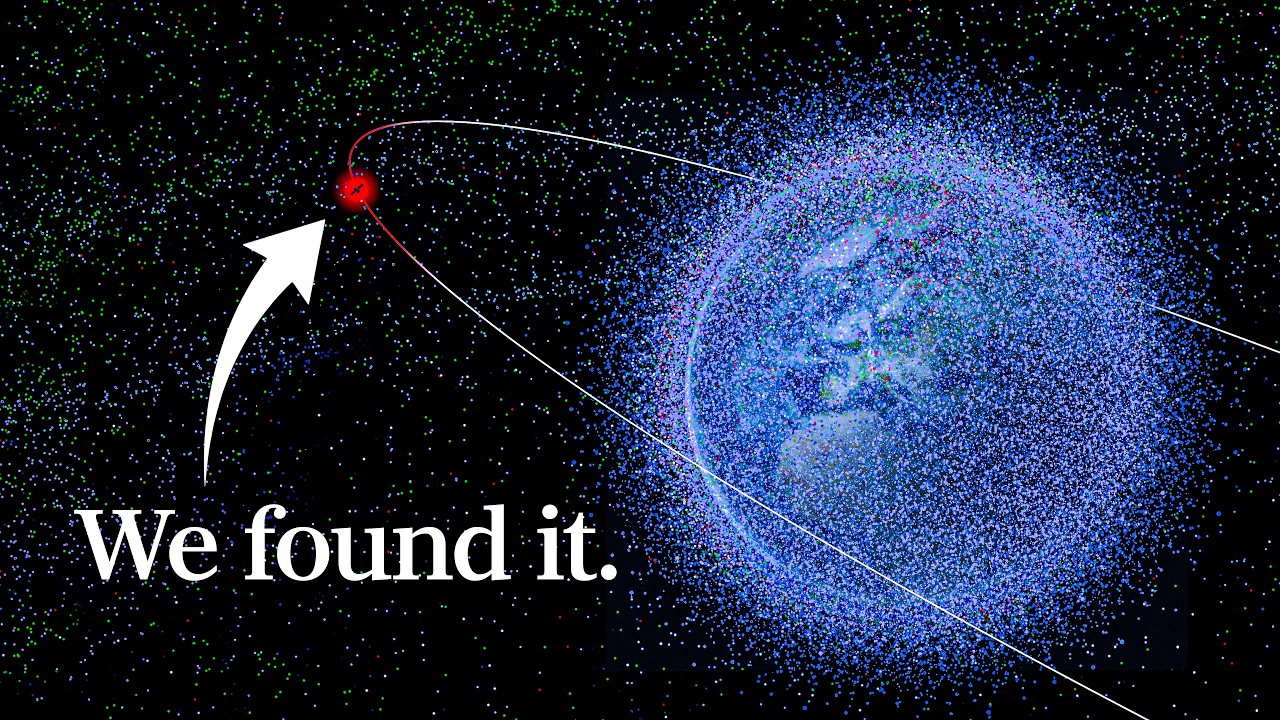
The only remaining possibility was a satellite. Using elevation masking, carrier-to-noise ratio patterns, and precise time-difference-of-arrival measurements from raw wideband recordings (notably from stations in Amsterdam and Trondheim during a February 2026 event), researchers constructed a quasi-hyperboloid surface locating the source. Only one satellite matched perfectly: Russia’s Kosmos 2546 (part of the EKS/Tundra early-warning constellation in highly elliptical Molniya orbits). Further analysis implicated the broader constellation of these ballistic-missile early-warning satellites, which have been in orbit since around 2015–2020 and provide long-duration northern-hemisphere coverage.
Events occurred mostly on weekdays during European business hours. The interference is intentional and powerful enough to degrade GNSS (GPS, Galileo, etc.) across a continent, though it sits slightly offset from the primary GPS frequency—possibly indicating testing of a capability that could later be tuned on-band for greater effect. Independent European teams corroborated aspects of the findings. Space-based GNSS jamming of this scale is extremely rare and represents a significant escalation in electronic warfare potential. The work is detailed in a 2026 preprint (“Chasing Lightning”) and has not yet completed peer review.