
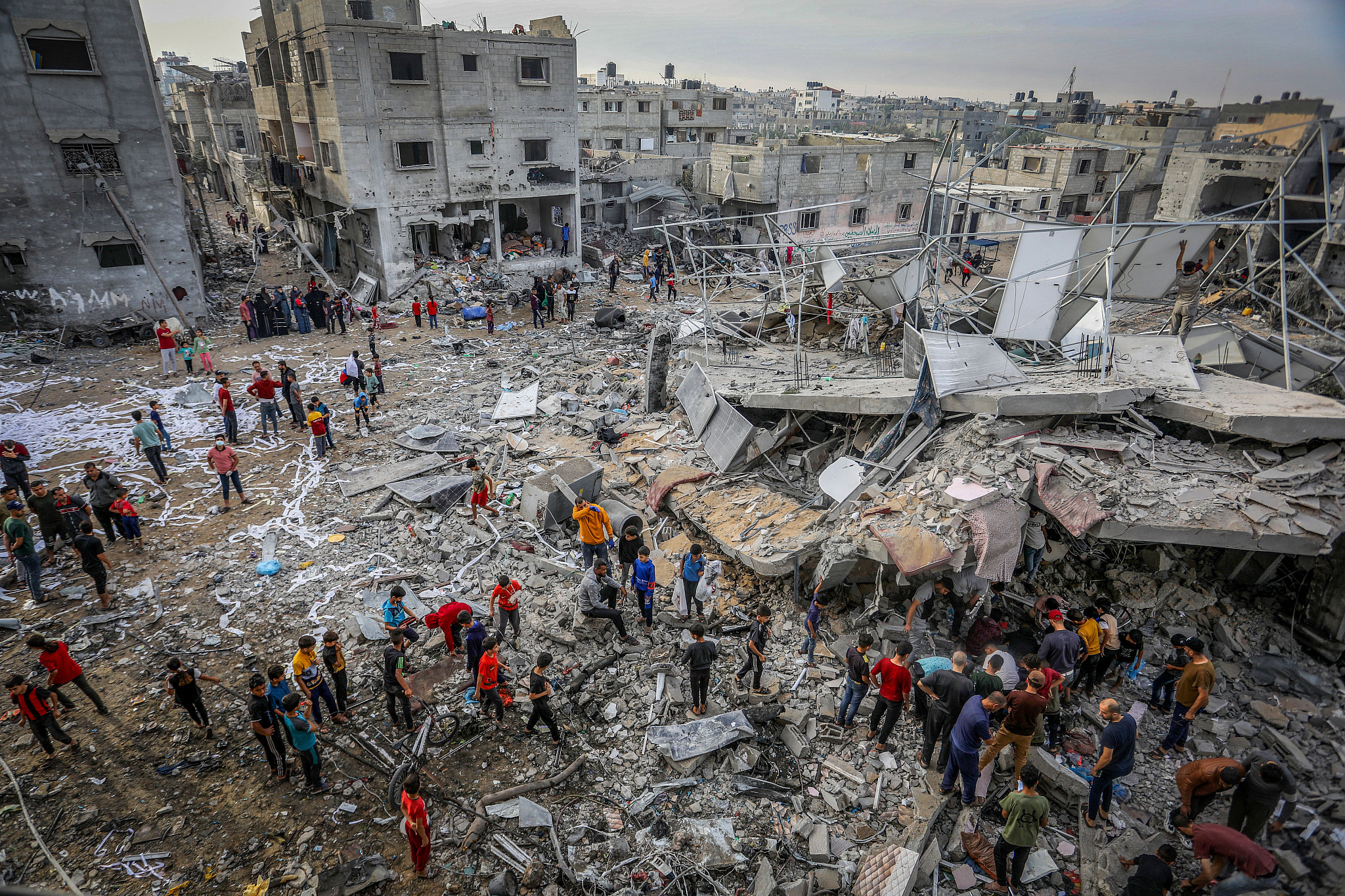
‘A mass assassination factory’: Inside Israel’s calculated bombing of Gaza

An investigation by +972 Magazine and Local Call, published on November 30, 2023, and based on conversations with seven current and former Israeli intelligence and air force personnel involved in Gaza operations, along with Palestinian testimonies, data, and official statements, examines the factors behind the high civilian toll in the early stages of Israel’s military campaign in Gaza following the October 7, 2023, Hamas-led attack. The piece argues that expanded authorization for striking non-military targets, relaxed rules on expected civilian casualties, and heavy reliance on an AI system contributed to one of the deadliest campaigns against Palestinians since 1948.
Sources describe four main target categories: tactical military sites (armed cells, weapons, launchers, headquarters); underground targets such as tunnels under civilian areas; “power targets” (high-rises, residential towers, universities, banks, government buildings) intended to create societal shock and pressure civilians to turn against Hamas; and family or operatives’ homes targeted to kill a single suspected Hamas or Islamic Jihad member. In the first five days, roughly half of the 2,687 targets struck were power targets. Intelligence files list expected civilian deaths for most potential targets in advance, and operators know approximate casualty numbers shortly before strikes. One source stated that permitted collateral damage for senior Hamas figures rose from dozens in prior operations to hundreds. Another emphasized that nothing is accidental: every civilian death, including that of a child, results from a deliberate decision that the cost is acceptable.
A key enabler is the AI system “Habsora” (“The Gospel”), which generates targets far faster than human analysts, enabling what a former officer called a “mass assassination factory” focused on quantity over quality. It supports large-scale strikes on homes of even junior operatives, and sources note that many targeted residences had no military activity. Cellular location data is sometimes used imprecisely to save time, increasing civilian risk. Palestinian accounts and data indicate strikes on homes without known militants, often without prior warning, killing entire families. Protocols that once required power targets to be empty of residents appear to have been loosened.
Casualty figures cited at the time include around 15,000 Palestinians killed (with later updates higher), more than 300 families losing 10 or more members (15 times the 2014 war figure), and children and women forming a large share of the dead. Israeli estimates of militants killed ranged from 1,000 to 3,000. Sources linked the intensity partly to a desire among senior officers to project strength after the October 7 intelligence and military failures. The article contrasts this with past Israeli practices and notes official statements emphasizing damage over precision. It presents the combination of policy changes and technology as driving extensive destruction of civilian infrastructure and life while pursuing Hamas.
https://www.972mag.com/mass-assassination-factory-israel-calculated-bombing-gaza/